Choosing the Right ACL Graft: Your Options Explained
June 10, 2026
3 min read
Dr. K. Sai Prajwal Reddy
When you need ACL reconstruction surgery, one of the important decisions is choosing the right graft. The graft is the tissue that replaces your torn ACL and helps restore knee stability. At our clinic, we help patients understand their graft options so they can make informed choices.
The graft choice depends on your age, activity level, sports you play, occupation, and whether you have had previous knee surgery. Let’s look at the main options.
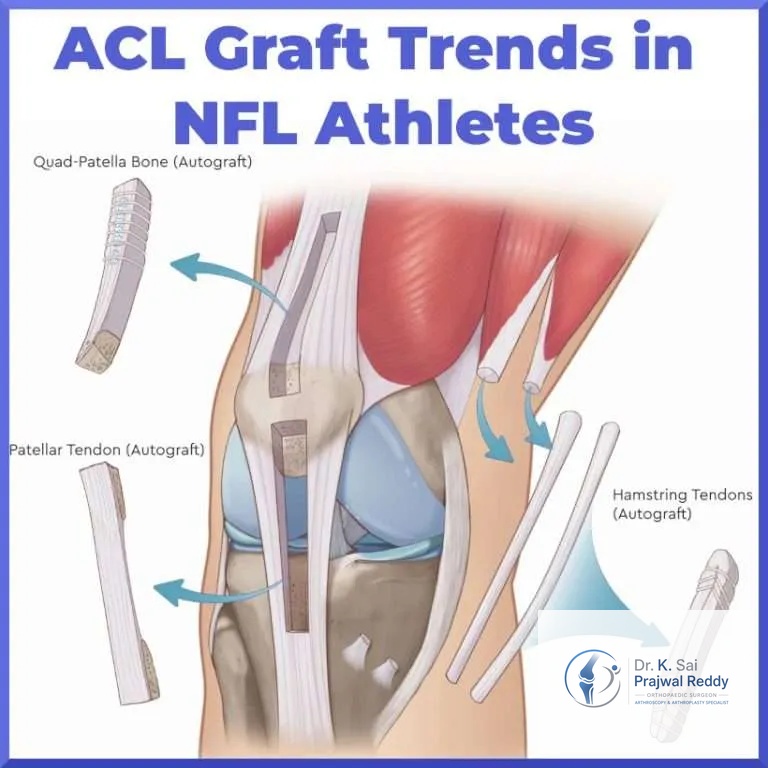
1. Hamstring Tendon Graft (Autograft)
What it is: This graft uses tendons from the back of your thigh (hamstring tendons). These tendons are strong and can be taken through small incisions.
Who it suits: Younger patients, athletes who do a lot of running and jumping, and people who want to avoid drilling into the kneecap.
Pros:
Strong graft with good outcomes
Less pain around the knee compared to patellar tendon
Smaller incision scars
Cons:
Some temporary weakness in hamstring strength
Slightly higher risk of stretching over time in some patients
2. Patellar Tendon Graft (Bone-Patellar Tendon-Bone or BPTB)
What it is: This graft takes the middle third of the patellar tendon, along with small pieces of bone from the kneecap and shin bone.
Who it suits: Contact sport athletes, high-level athletes, and patients who want the fastest bone-to-bone healing.
Pros:
Bone plugs help the graft heal quickly into the bone tunnels
Very strong graft with excellent stability
Proven track record in professional athletes
Cons:
More pain around the kneecap initially
Risk of kneecap fracture (rare)
Some patients notice persistent pain when kneeling
3. Quadriceps Tendon Graft
What it is: This uses part of the quadriceps tendon above the kneecap, sometimes with a piece of bone.
Who it suits: Patients who have had previous hamstring or patellar tendon surgery, or those who want a strong graft without using the kneecap area.
Pros:
Large, strong graft
Less donor site pain compared to patellar tendon
Good option for revision surgery
Cons:
Less commonly used, so surgeon experience matters
Some quad strength loss initially
4. Allograft (Donor Graft)
What it is: Tissue from a donor, which can be patellar tendon, hamstring, Achilles tendon, or other tissues.
Who it suits: Older patients, patients with multiple ligament injuries, revision surgeries, or those who want to avoid harvesting their own tissue.
Pros:
No donor site pain or weakness
Faster initial recovery
Multiple tissue options available
Cons:
Slightly higher risk of graft failure in young, active patients
Small risk of disease transmission (extremely rare with modern screening)
May take longer to incorporate into your bone
What graft do we recommend?
There is no single “best” graft for everyone. Studies show all major graft types work well when done by experienced surgeons. Your graft choice should match your lifestyle and goals:
Contact sports: Patellar tendon graft
Running/jumping sports: Hamstring or quadriceps
Recreational sports or daily activities: Hamstring, allograft, or quadriceps
Revision surgery: Allograft or quadriceps tendon
What happens next?
During your consultation, we will review your MRI, discuss your activity level, and explain which graft options suit you best. We’ll also talk about recovery timelines and what to expect after surgery.
The goal is to help you return to your activities with a stable, strong knee.