Understanding Anterior Knee Pain Syndrome and the Right Steps to Recovery
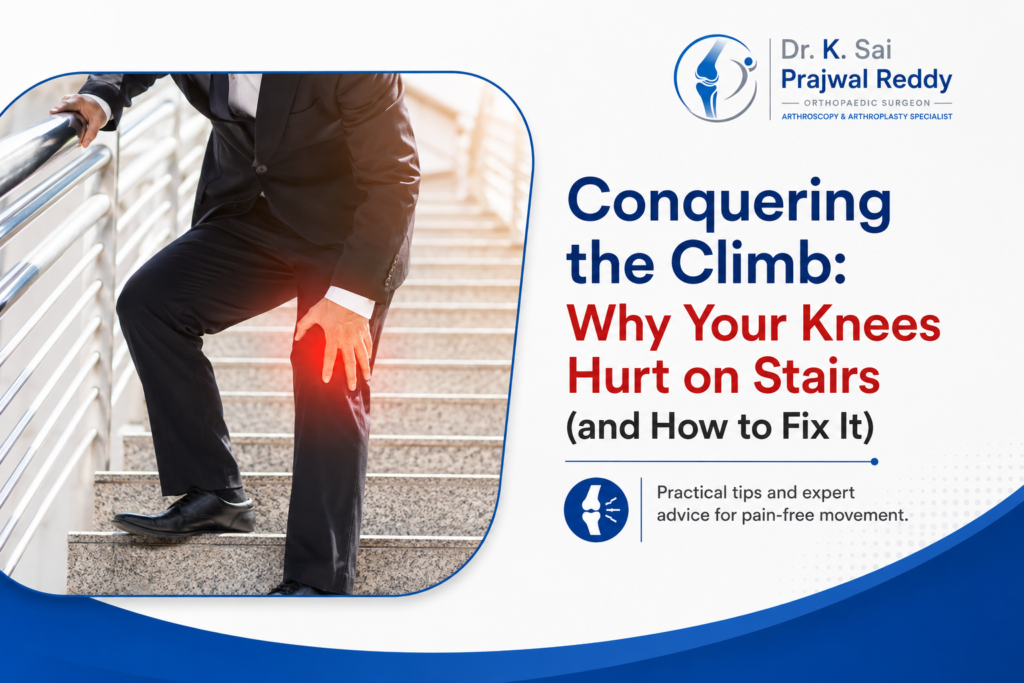
If you are young, active, and suddenly notice pain in the front of your knee while climbing stairs, sitting for long periods, or exercising, you are not “getting old.” You may be experiencing Anterior Knee Pain Syndrome, one of the most common causes of knee discomfort in adolescents, athletes, and working professionals.
The encouraging reality is this:
Most cases are due to movement imbalance — not permanent damage — and can be corrected with the right exercises and guidance.
What Is Anterior Knee Pain Syndrome?
Anterior Knee Pain Syndrome (also called Patellofemoral Pain Syndrome) refers to pain at the front of the knee, especially around or behind the kneecap (patella).
It commonly affects:
- Young adults
- Athletes
- Gym users
- Office workers
- Students
- Individuals who sit for long periods
Why Does Knee Pain Occur While Climbing Stairs?
When you walk downstairs, your knee bears:
3 to 5 times your body weight
If the muscles around the knee are weak or tight, the kneecap does not move smoothly.
Think of the kneecap as:
A train on a track
If alignment is disturbed:
- The kneecap shifts sideways
- Friction increases
- Pain develops
This is called:
Patellar maltracking
Common Symptoms of Anterior Knee Pain
You may notice:
- Pain while climbing stairs
- Pain after sitting for long periods
- Grinding or clicking sensation
- Knee stiffness
- Pain during squatting
- Discomfort during exercise
- Knee fatigue
This is often called:
“Movie Theatre Sign”
Pain after prolonged sitting.
Who Is at Risk?
Several factors increase the risk of anterior knee pain.
Common Risk Factors
- Weak thigh muscles
- Weak hip muscles
- Tight quadriceps
- Tight IT band
- Poor posture
- Flat feet
- Sudden increase in exercise
- Overuse injuries
- Improper footwear
These factors disturb knee alignment.
The Real Cause: Muscle Imbalance
Most knee pain in young people is not due to joint damage.
It is due to:
Muscle imbalance
Two patterns are common:
Tight Muscles
These pull the kneecap out of alignment.
Examples:
- Quadriceps
- Hip flexors
- IT band
Weak Muscles
These fail to stabilize the knee.
Examples:
- Gluteus medius
- Core muscles
- VMO (inner thigh muscle)
Your 2-Step Recovery Plan
The goal is simple:
Relax tight muscles and strengthen weak muscles
Step 1: Relax the Tight Muscles (Stretching)
Stretching reduces tension and improves movement.
Quadriceps Stretch
Benefits:
- Reduces knee pressure
- Improves flexibility
How to perform:
- Stand on one leg
- Hold ankle behind
- Keep knees together
- Hold for 20 seconds
Hip Flexor Stretch
Benefits:
- Reduces stress on knee joint
- Improves posture
How to perform:
- Kneel on one knee
- Push hips forward
- Hold for 20 seconds
Step 2: Strengthen the Support Muscles
Strengthening stabilizes the knee and prevents pain.
Clamshell Exercise
Targets:
Gluteus medius
Benefits:
- Improves leg alignment
- Reduces knee collapse
VMO Strengthening (Short Squats)
Targets:
Inner thigh muscle
Benefits:
- Stabilizes kneecap
- Reduces knee pain
Perform:
- Small squats (30 degrees)
- Controlled movement
How Long Does Recovery Take?
Most patients improve within:
3 to 4 weeks
With:
- Regular stretching
- Strengthening exercises
- Activity modification
Consistency is the key factor.
When Should You See an Orthopedic Specialist?
Seek medical evaluation if:
- Knee swelling appears
- Knee locks or catches
- Knee feels unstable
- Pain persists beyond 3–4 weeks
- Pain worsens during activity
- Walking becomes difficult
These symptoms may indicate:
- Meniscus injury
- Ligament injury
- Cartilage damage